You know what you want — and it keeps sliding out of view
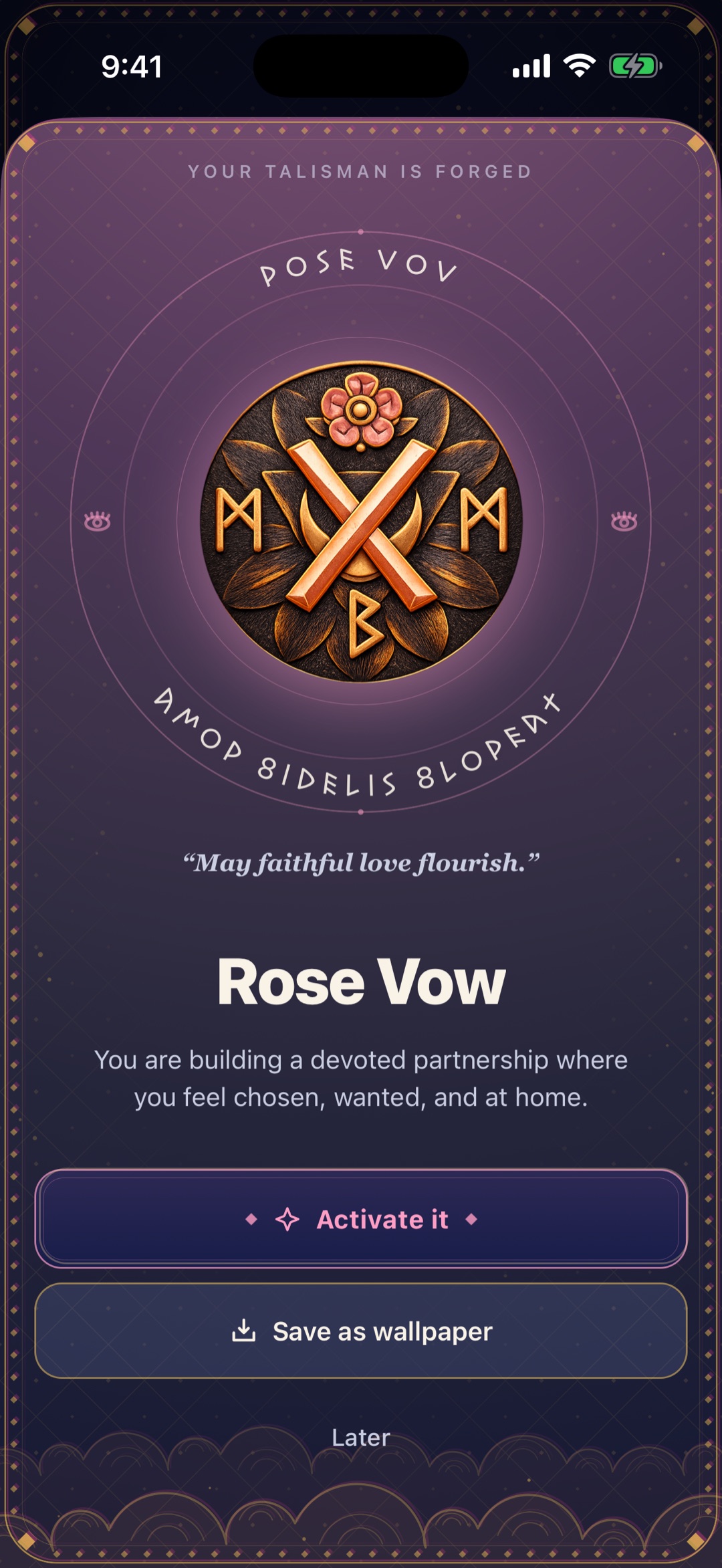
A sign lives on your lock screen. Dozens of glances a day, each one a half-second return to the thing you said mattered.
Coming soon to the App Store and Google Play. Follow for the launch date
A commitment practice, one emblem per goal
Name what you're working toward, face what usually gets in the way, and make one small vow. MyTalisman forges a one-of-a-kind emblem from your answers — an ancient-looking mark that exists for a single purpose: to keep your goal where you can't lose sight of it.
Landing soon on iPhone and Android · 3 days free · No feed, no streak guilt
Be honest with yourself
Most goals aren't abandoned. They're mislaid — quietly, a day at a time, until you couldn't say when you stopped. A sign you can see is a goal you can't quietly drop.
A sign lives on your lock screen. Dozens of glances a day, each one a half-second return to the thing you said mattered.
The forge asks what usually gets in the way, and what you'll do when it shows up. That answer is carried on the sign.
One fixed minute a day asks almost nothing of you. That's the point: a practice you can keep on the day you don't feel like it.
Set a Boundary instead: the limit stays in sight, with the response you chose in advance already decided.
Each sign holds for a real term with a real end date. It completes, and a place opens for what's next.
Six places, no more. No feed to scroll, nothing to consult, and the app will not sell you a seventh.
A sign won't do the work for you. It makes the work harder to forget.
No magic — and we say so in the app
A sign works through three honest mechanisms: attention — a goal you can see is a goal you can't quietly drop; ritual — a fixed minute a day steadies you, and that has been measured; and meaning — the sign is drawn from your own words. It works even if you don't believe it will.
The model
A genuine behavioural loop — the same one that drives lasting change — wrapped in something beautiful enough that you'll actually return to it.
You name the goal in your own words — naming what you want is the first act of moving toward it.
On your lock screen, the sign keeps bringing that goal — and the chance to act on it — back to mind.
You wake it once by speaking a short affirmation aloud, then the daily minute settles you into the state you chose.
You commit to one if-then plan — "when X happens, I'll do Y" — the technique with the strongest evidence behind it.
Sign and intention grow associated, until a single glance is a shortcut back to what you decided.
What it's for
Especially when the outcome matters but is hard to control — an exam, a pitch, a fresh start, a habit you're rebuilding. A sign doesn't bend the world. It changes how reliably you meet it.
When you can't control the result, a ritual gives you something you can do: "I've prepared. I know my focus. I can take the next step."
Experiments link a small pre-task ritual to lower anxiety and steadier performance — likely through self-efficacy. A possible boost, never a guarantee.
On your lock screen it nudges the behaviour, not the wish — send the proposal, make the call, take the next honest step.
Same image, same words, same breath, same order. Predictable structure is linked with calm, lower anxiety, and a felt sense of readiness.
"When X happens, I'll do Y" converts an intention into a decision already made. Dozens of studies; one of the most reliable effects in the field.
Not "this will make it happen" — but "this reminds me to think and act like the person who does the work." An identity cue, not a wish.
Inside every sign
Each sign MyTalisman forges is more than an image — it's a complete, personal practice.
What you're working toward, in your own words. e.g. finish the thesis without losing my evenings.
A one-of-a-kind mark composed from your answers — and never made again.
How you want to meet it: focused, steady, calm, brave, clear.
A short rhyming couplet in your own register. Speak it aloud once to wake the sign — your voice starts its term.
A day: settle your gaze, breathe with it, say your word, and seal a small if-then plan.
A real end date. When it arrives you complete the sign, and a place opens for what's next.
The forge
Specific beats vague: not "get fitter", but "be able to run the coast path in October". The forge takes your answers and nothing else — no birth date, no calendar, no sky.
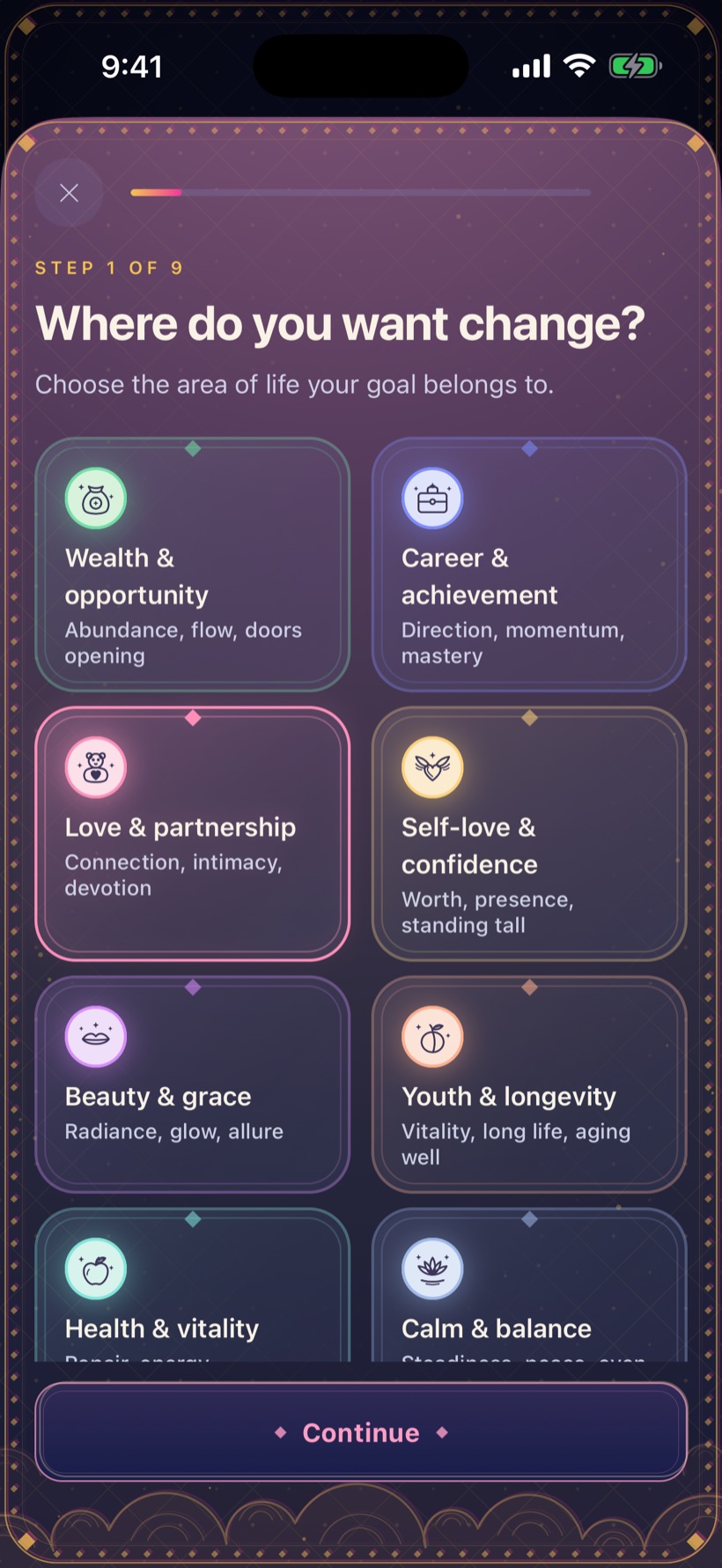
Where the change livesNine areas of life. Pick where this goal belongs.
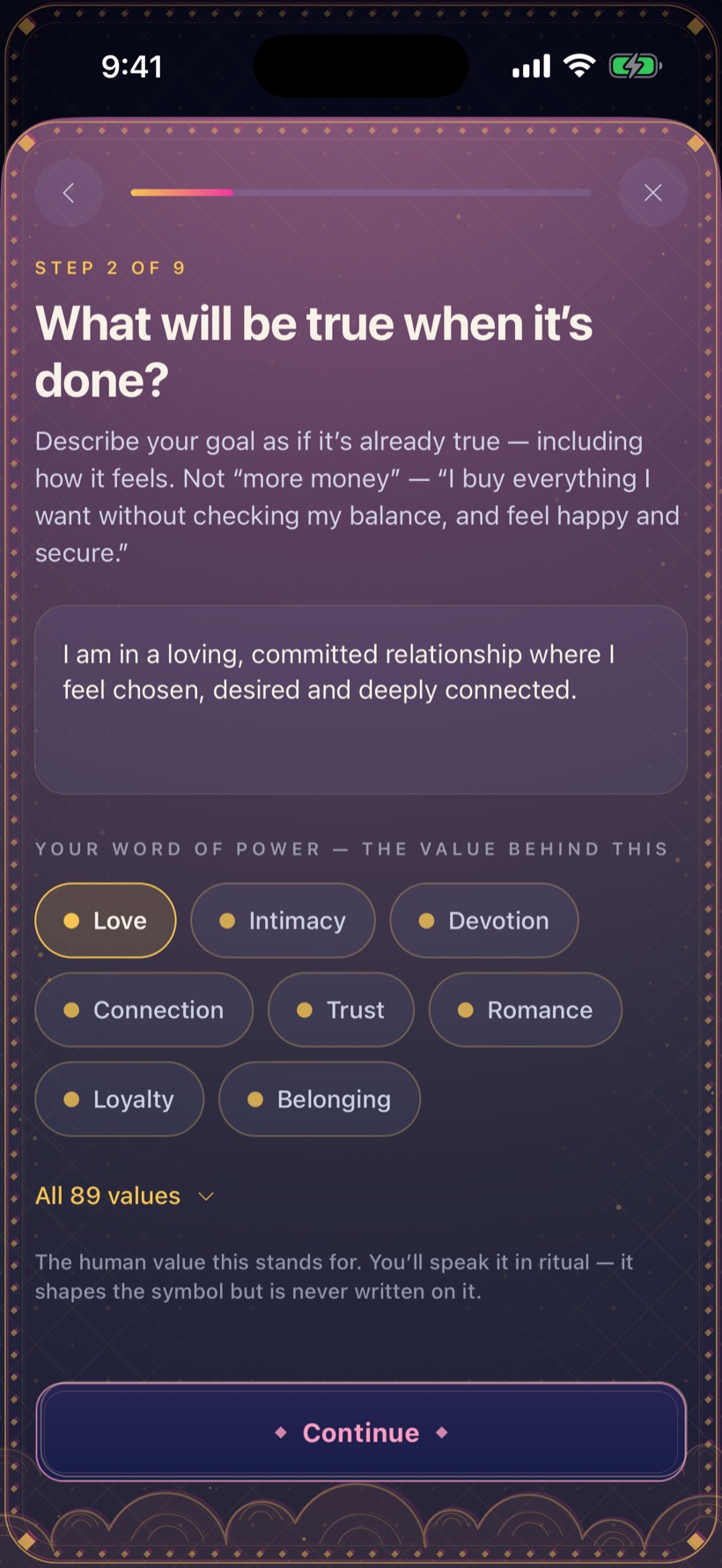
Say it in your wordsAs if it's already true — and the value underneath it.
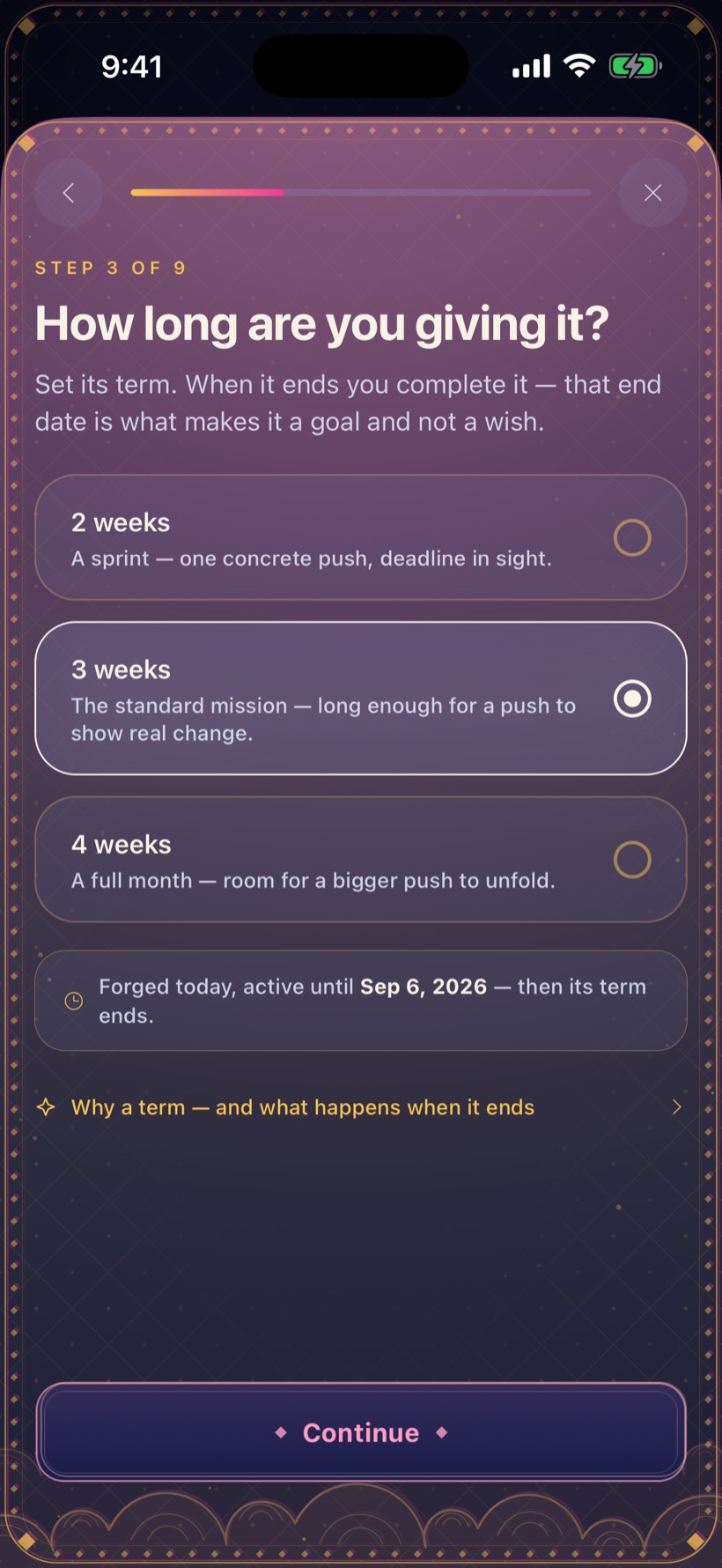
Give it a termTwo, three or four weeks — with a real end date.
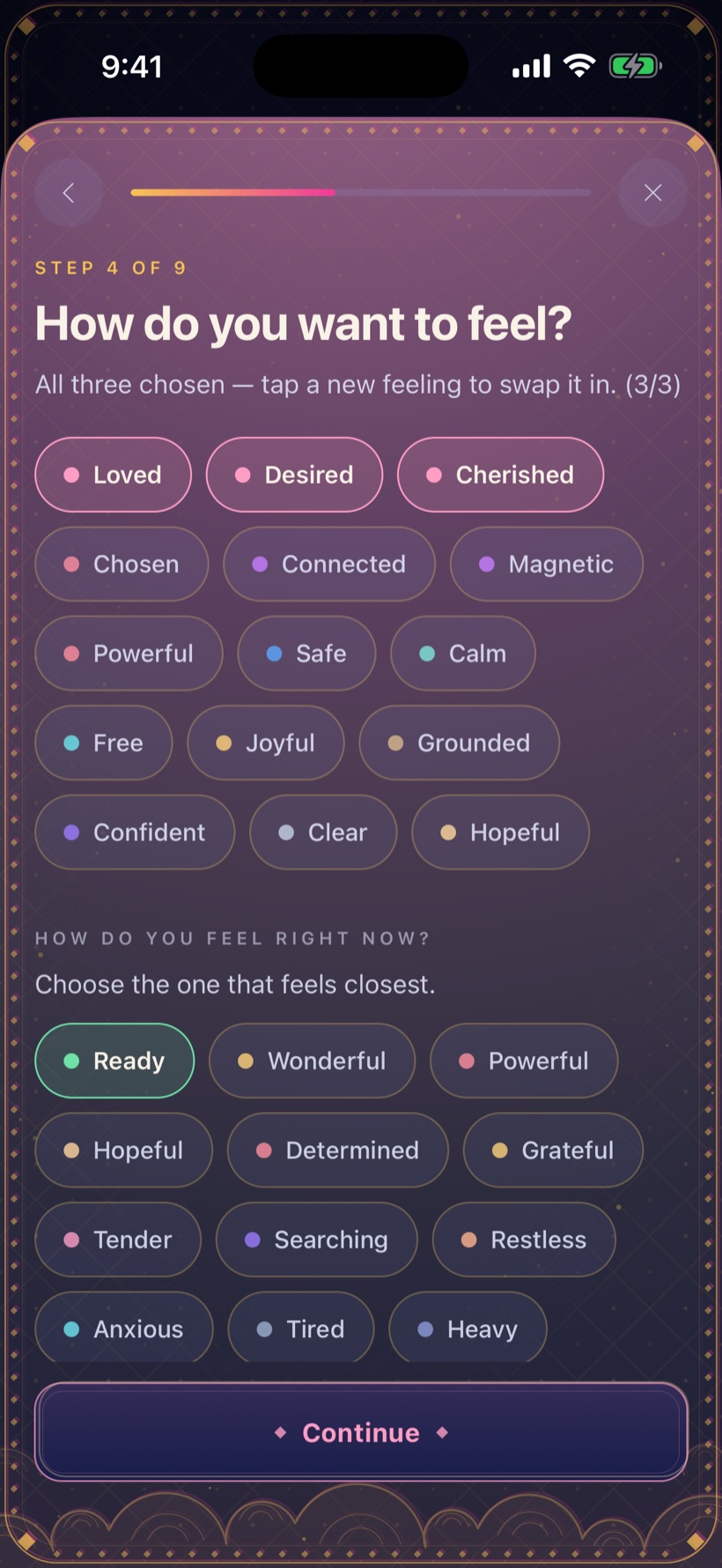
Choose the feelingHow you want to meet it — and how you're arriving today.
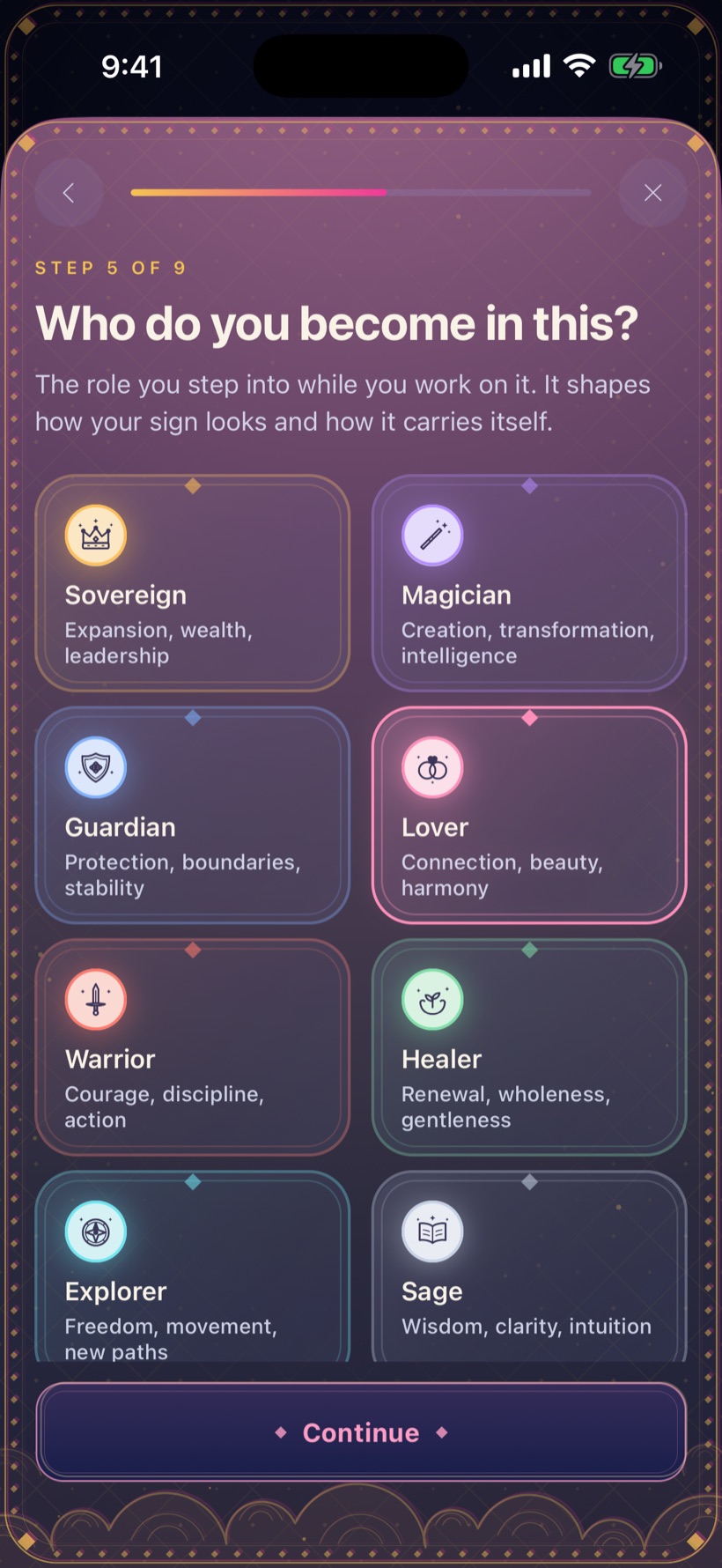
Step into an archetypeSovereign, Magician, Guardian, Lover, Healer, Sage.
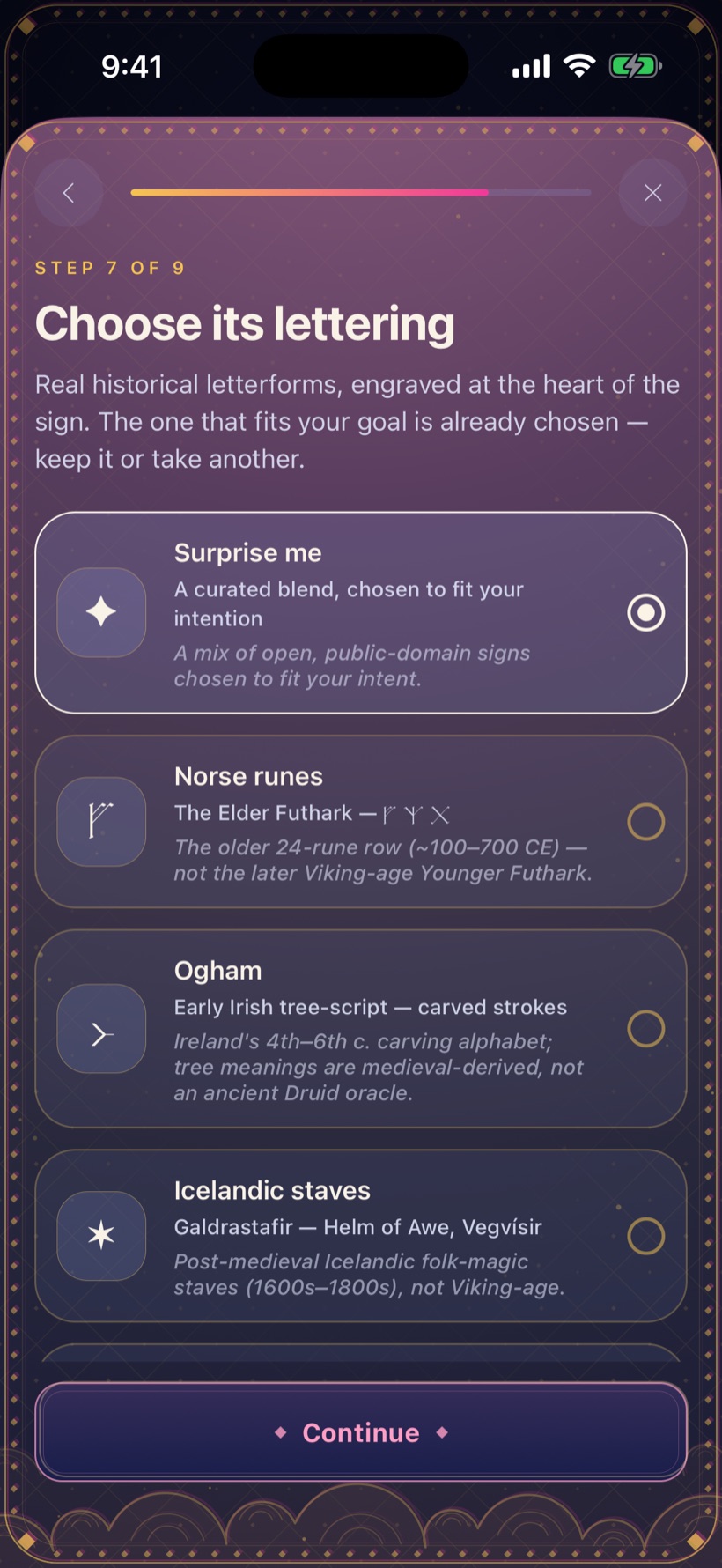
Choose its letteringReal historical letterforms — runes, Ogham, staves.
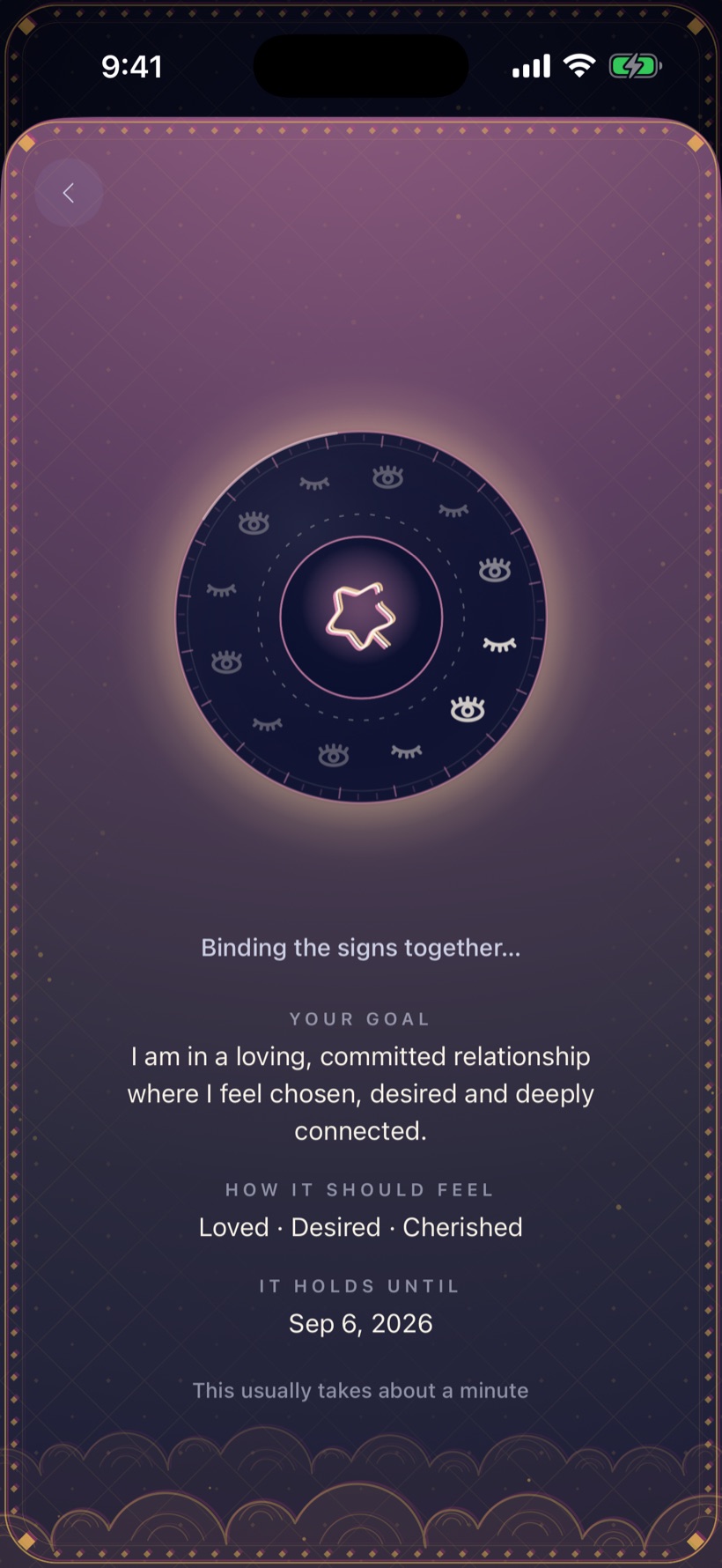
The forge binds itOne emblem from all your answers. Never made again.
The waking
A freshly forged sign is dormant. To wake it you hold it and say a short affirmation aloud — two rhyming lines written for this sign alone. Your voice starts its term. Prefer not to speak? Wake it in silence instead.
Its affirmation — Granite Garden
"Granite holds and will not part,
peace stands guard around my heart."
If you speak it, the recording is saved only in the app's own storage on your phone, so you can hear it again. It is never uploaded, never transcribed, and it goes when the app goes.
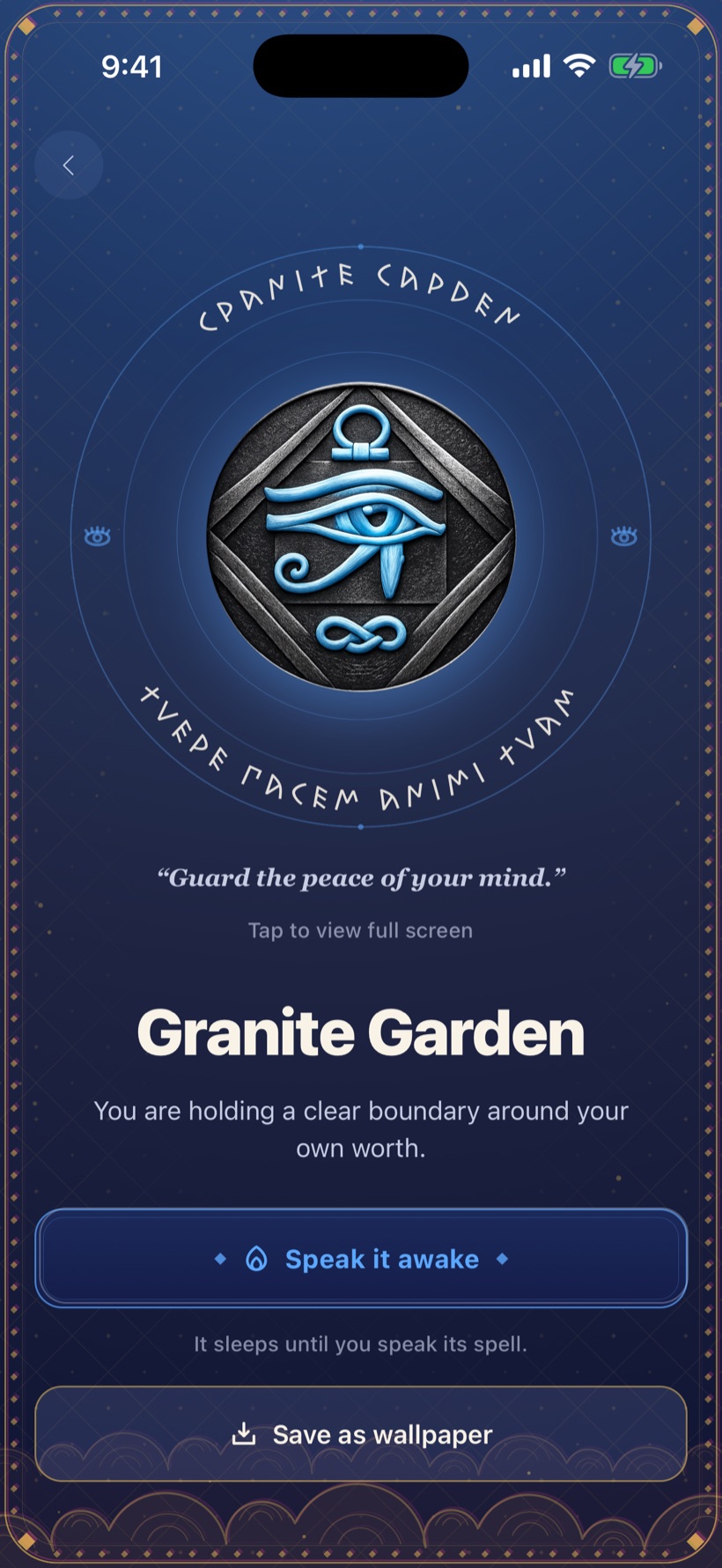
Fresh from the forge, your sign waits — quiet, uncounted, its term not yet begun.
A short affirmation, written for this sign alone, with your own word inside it.
Hold, and say it aloud — or choose silence. Either way, the choice is yours.
The moment you finish, it wakes — and holds with you for its full term, from now.
One minute a day
Every day, the same short ceremony — and in it, the one thing that does the work: you commit to a specific if-then plan, and the app shows it back to you afterwards in the words you chose.
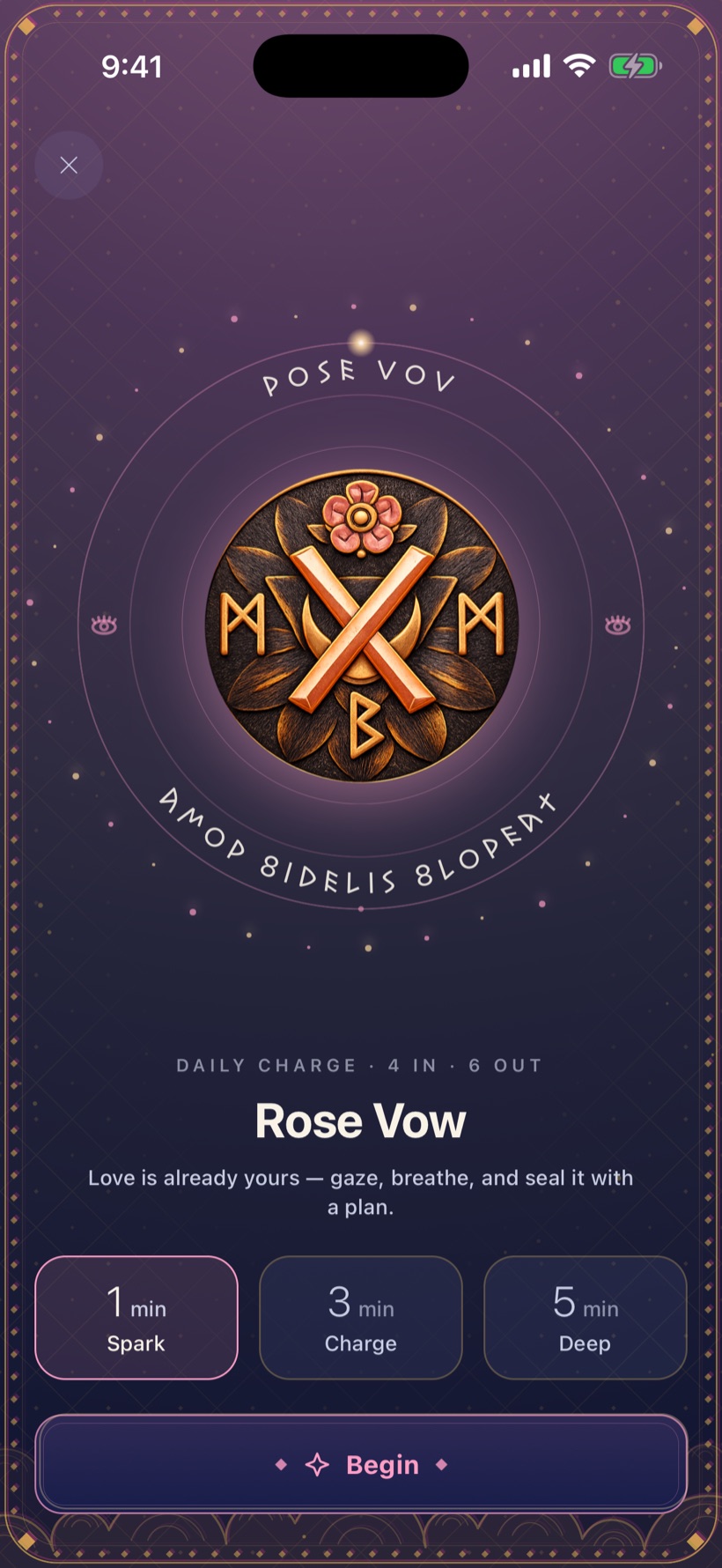
Settle your gazeRest on the emblem for three slow seconds.
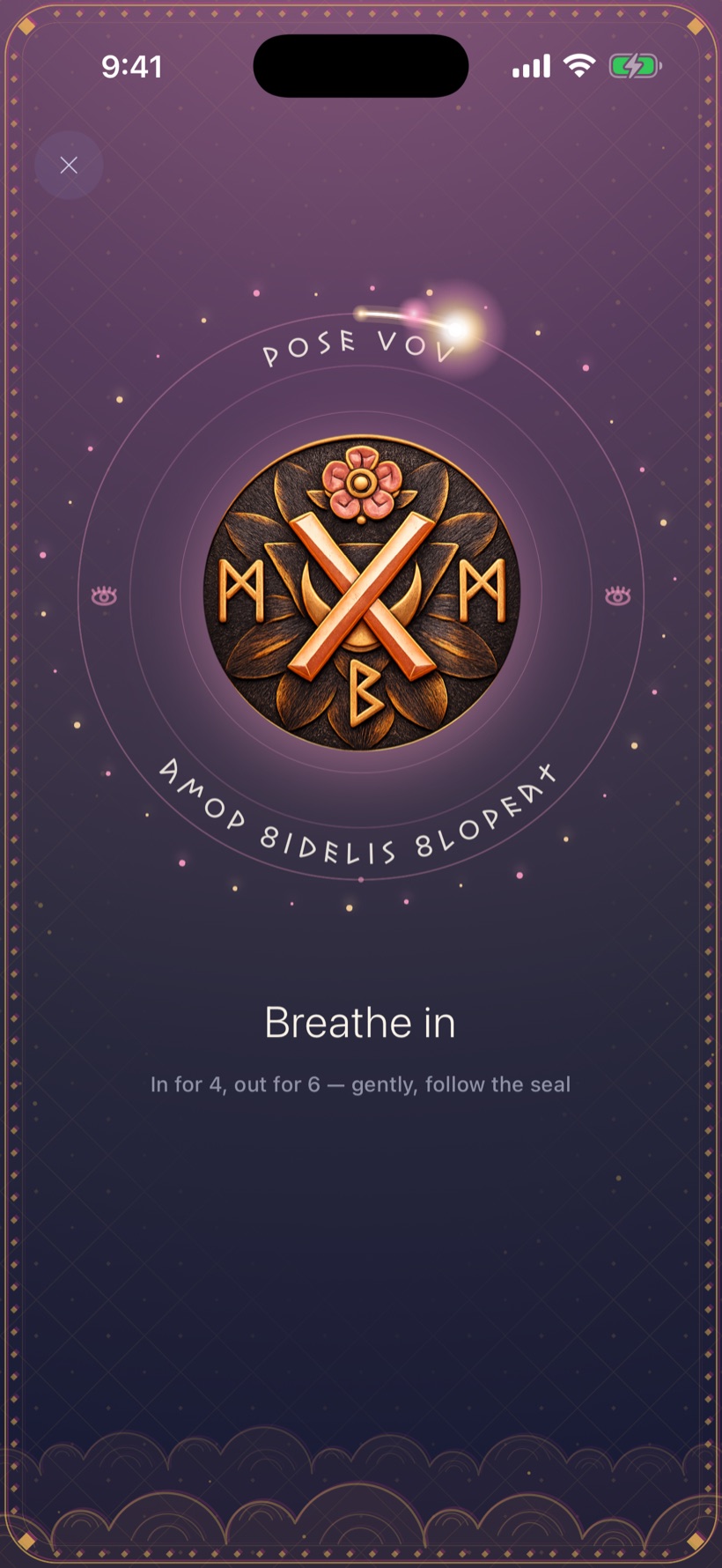
Breathe with itThe seal swells and settles, pacing each breath.
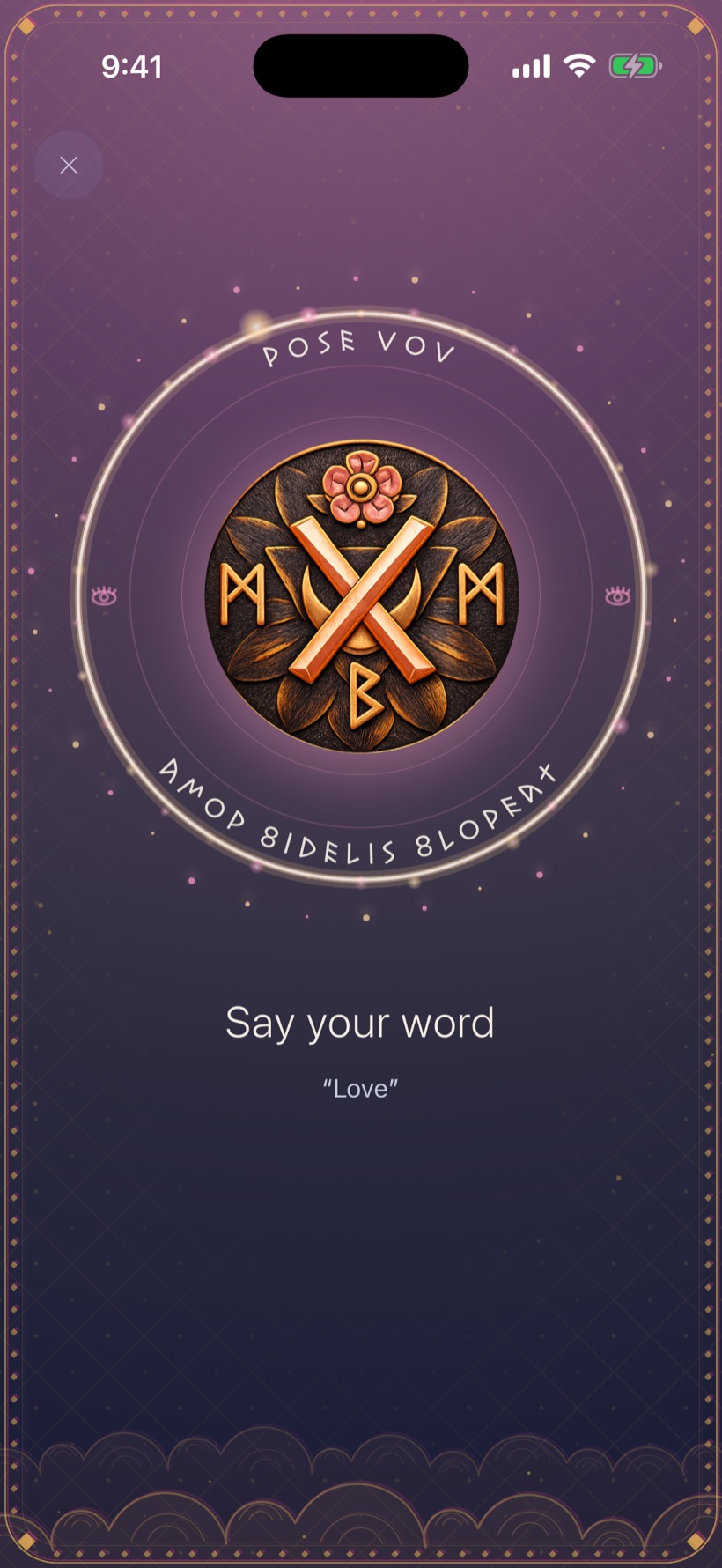
Say your wordThe one word that's only yours.
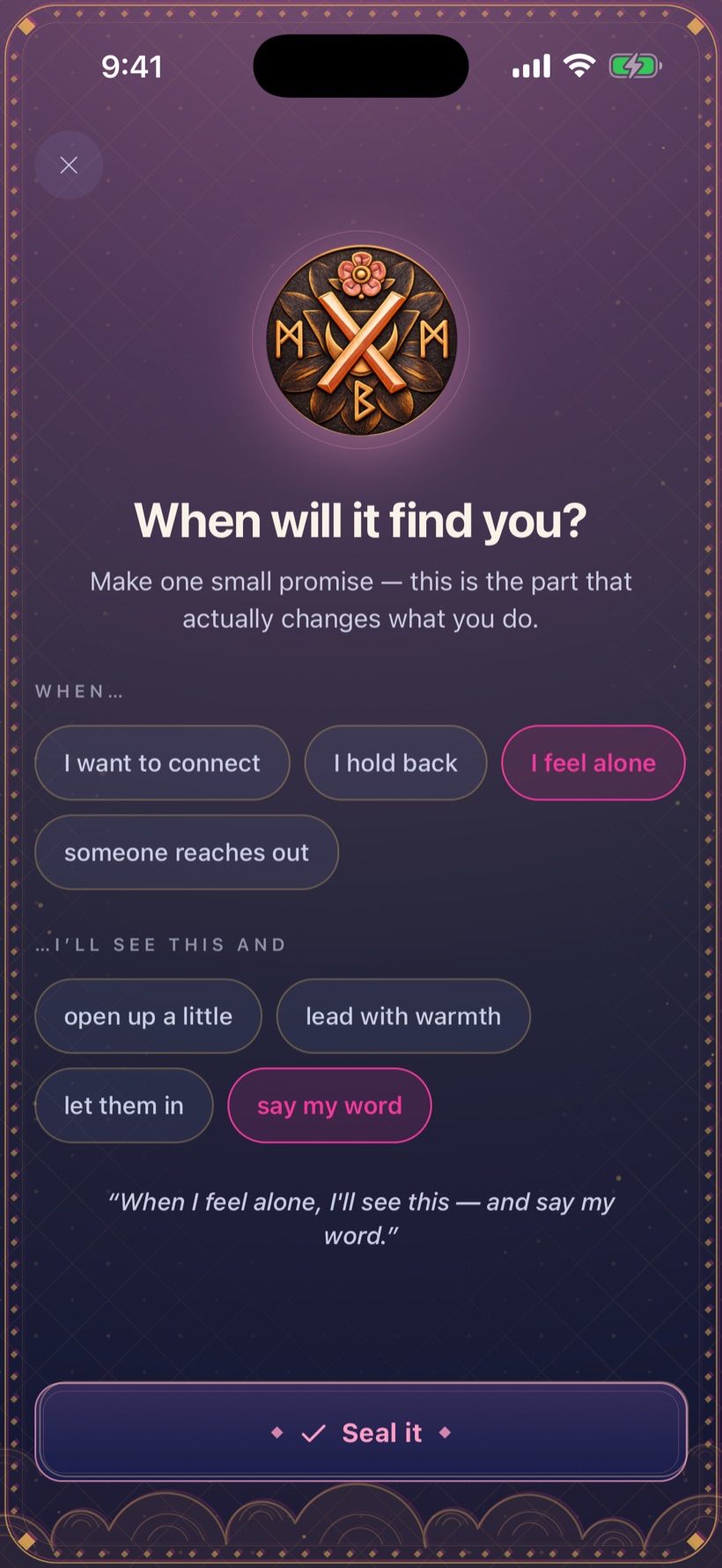
Seal a plan"When this happens, I'll do that."
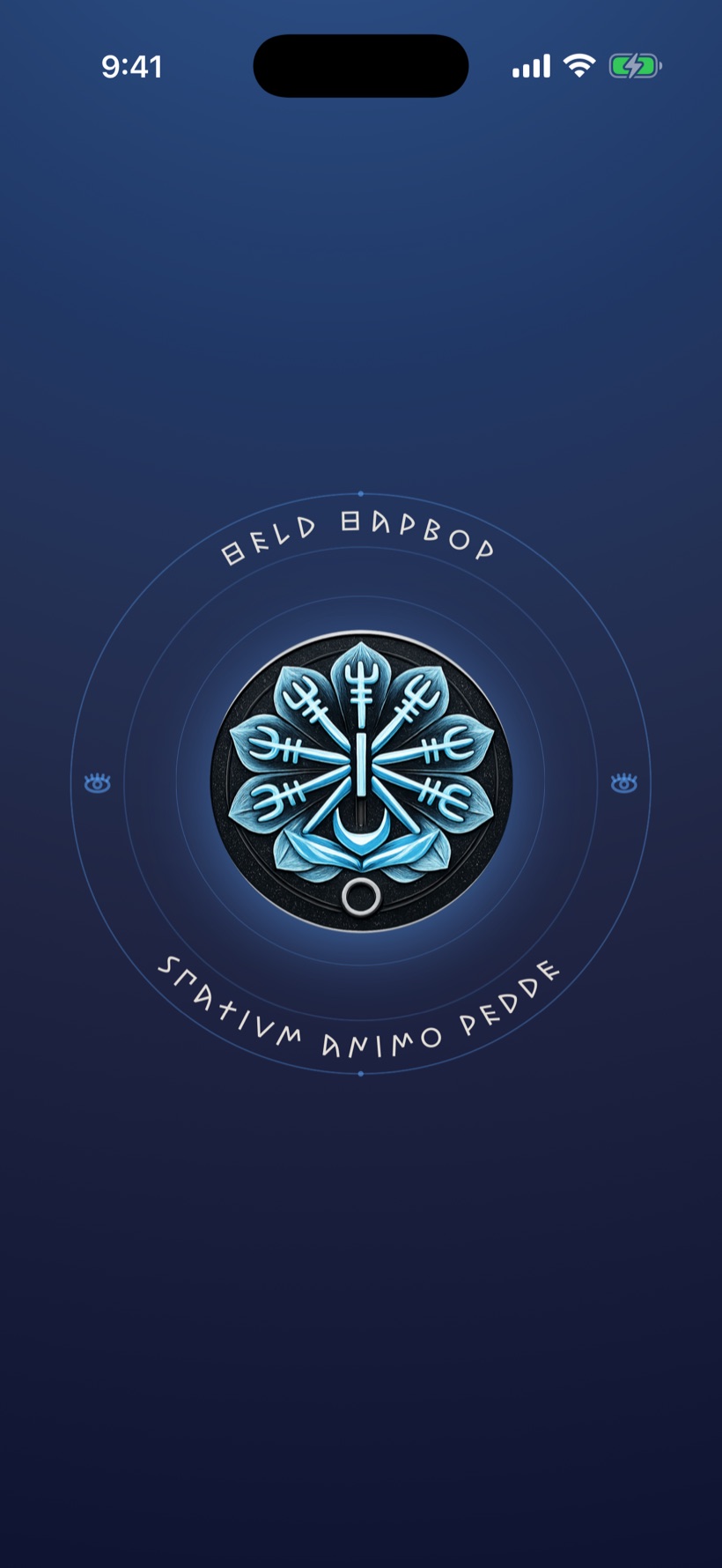
Carry itSave the sign as your wallpaper. A glance is enough.
No countdown, no ticking digits, no streak to lose. Come back tomorrow, or don't — the sign holds its term either way.
Struck once
Every emblem is composed from one bearer's answers — its colours, lettering and marks are its own, and it can never be made again. Ten, as they left the forge.
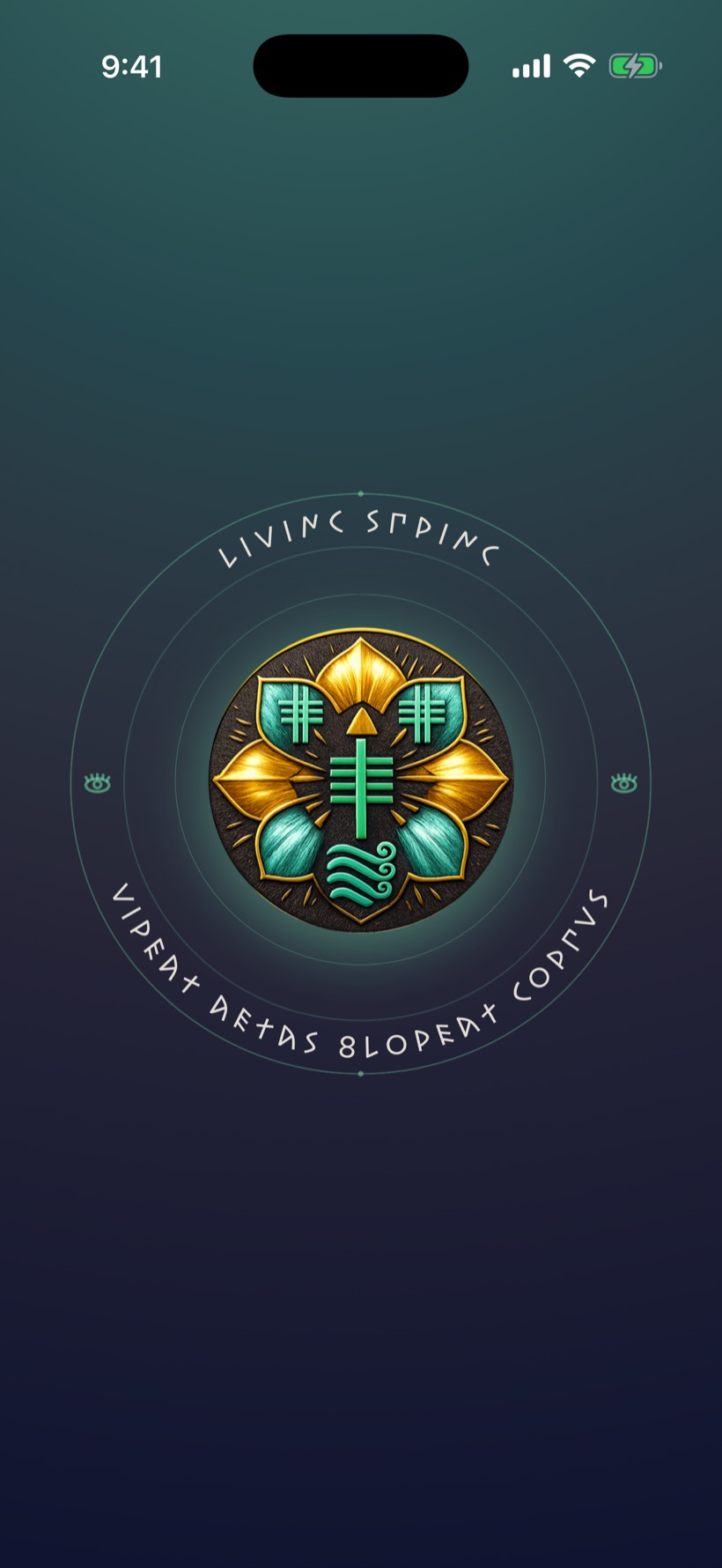
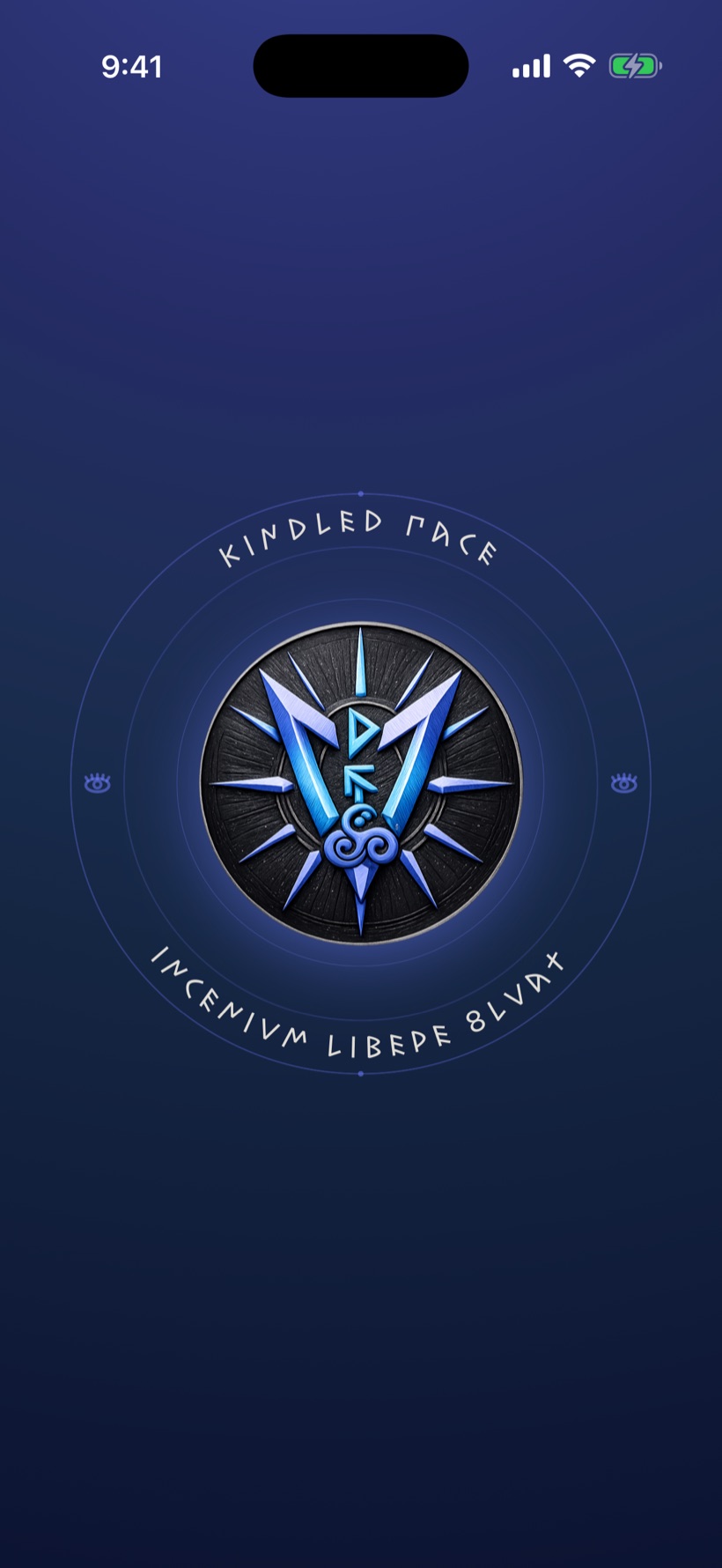
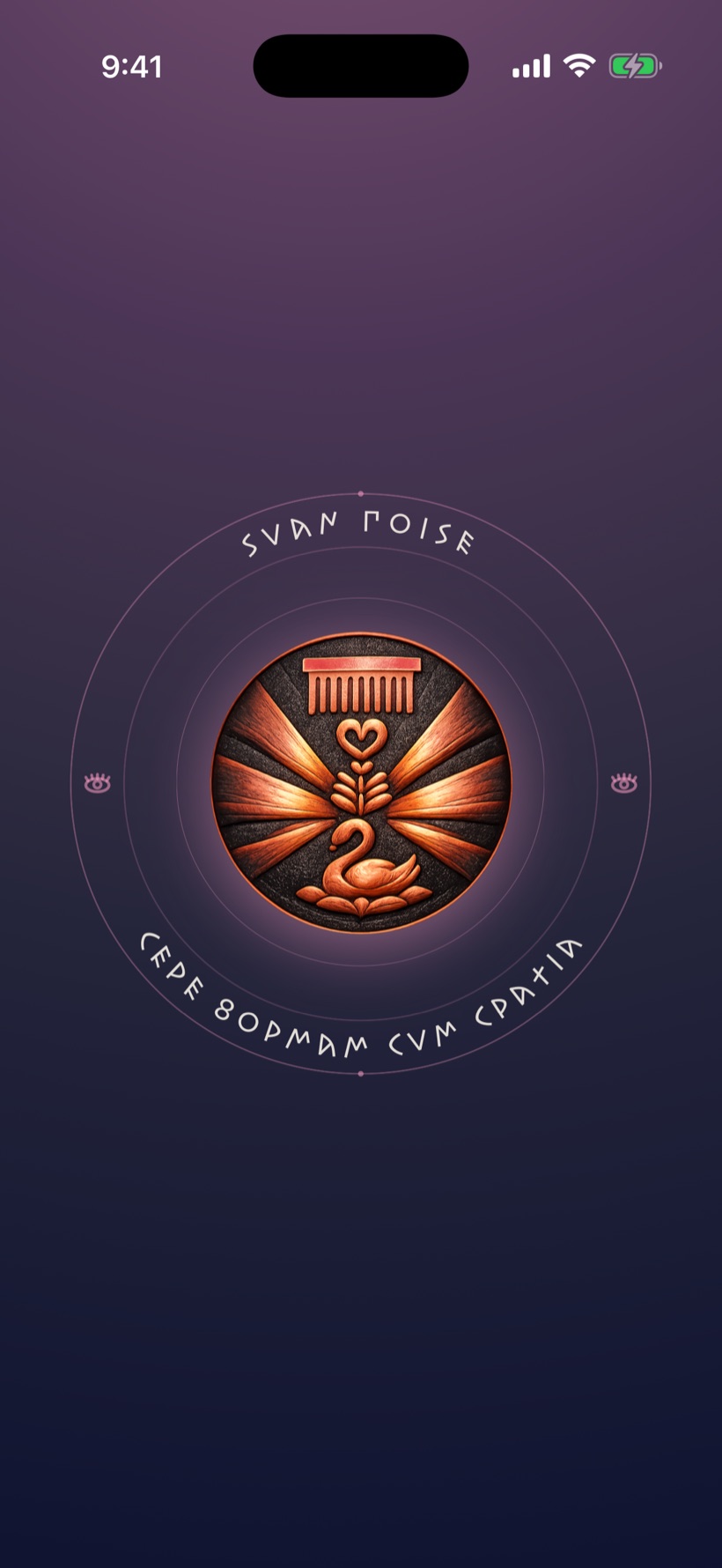
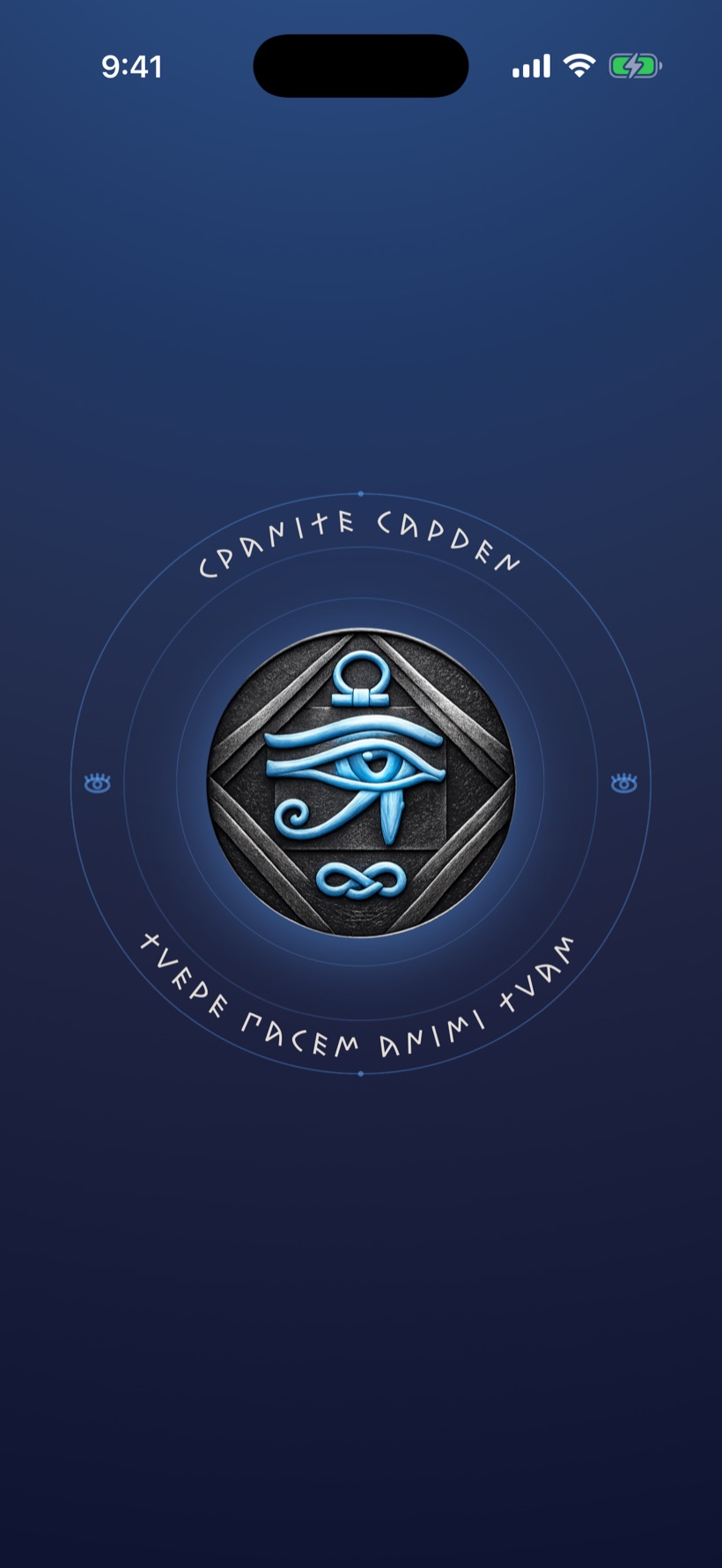
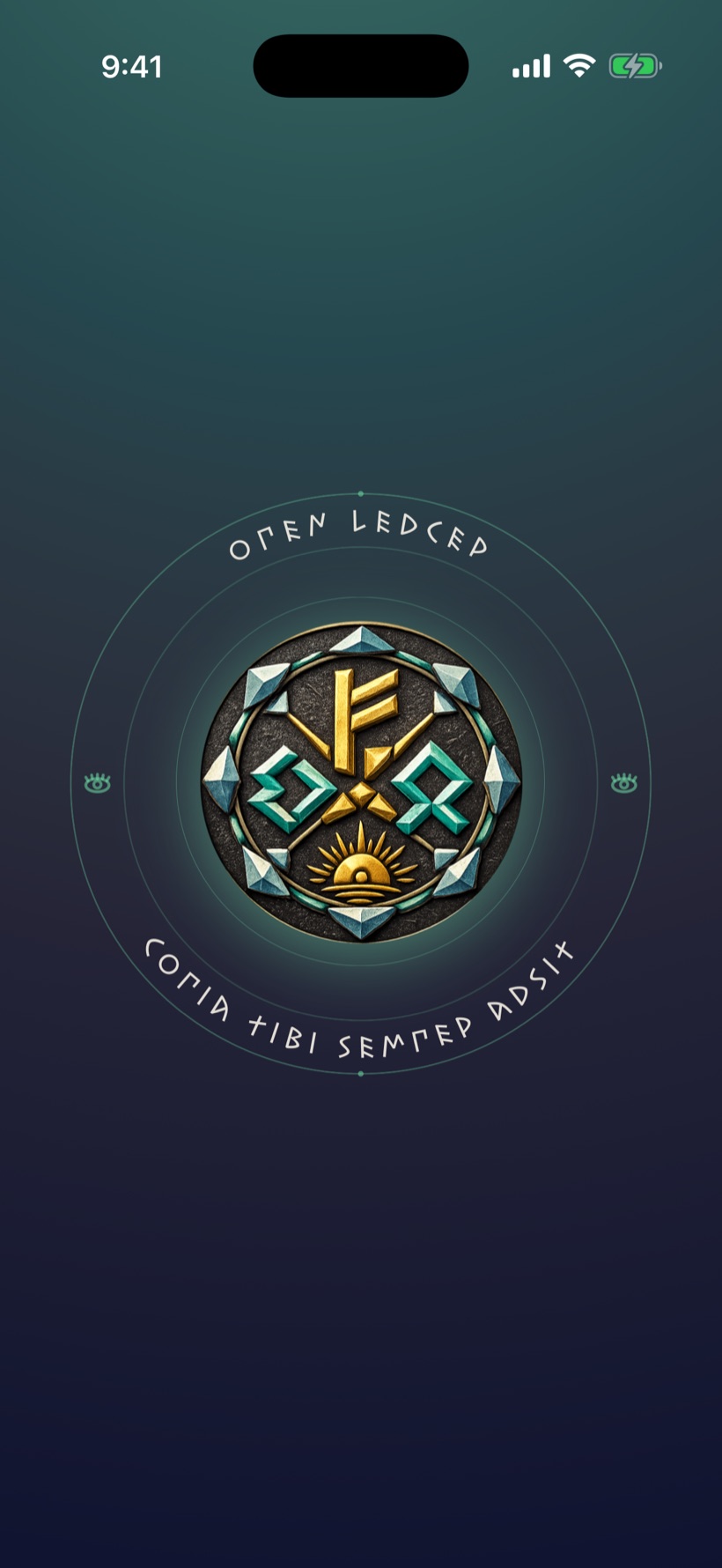
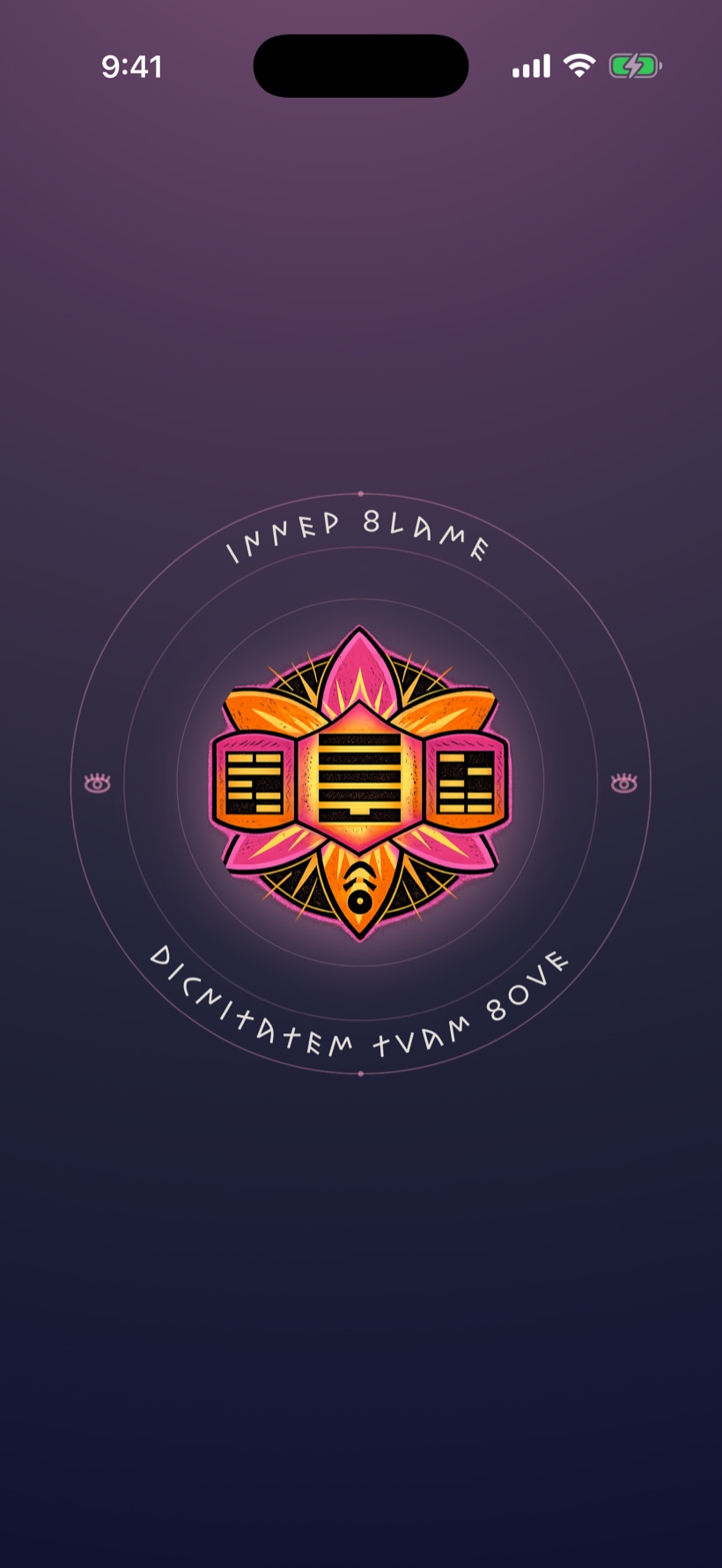
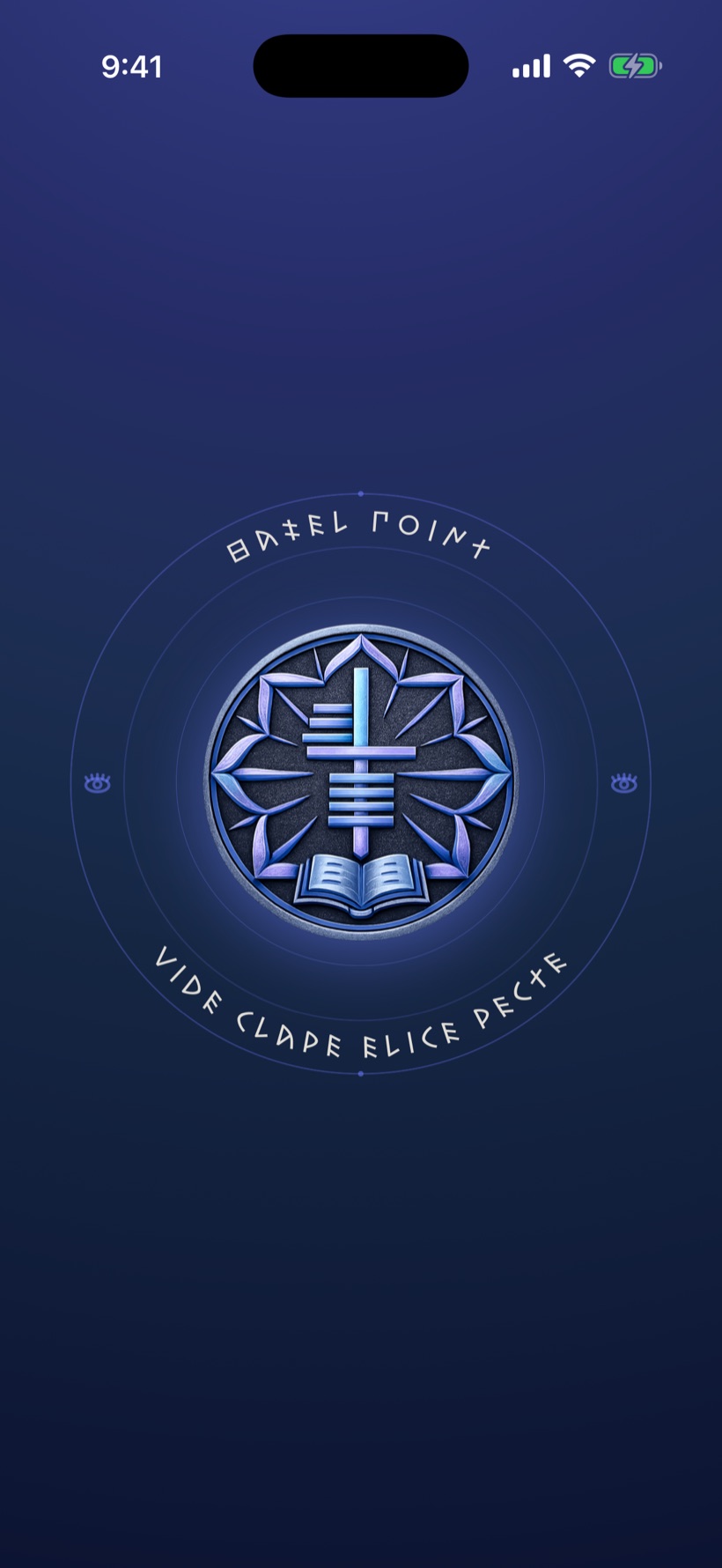
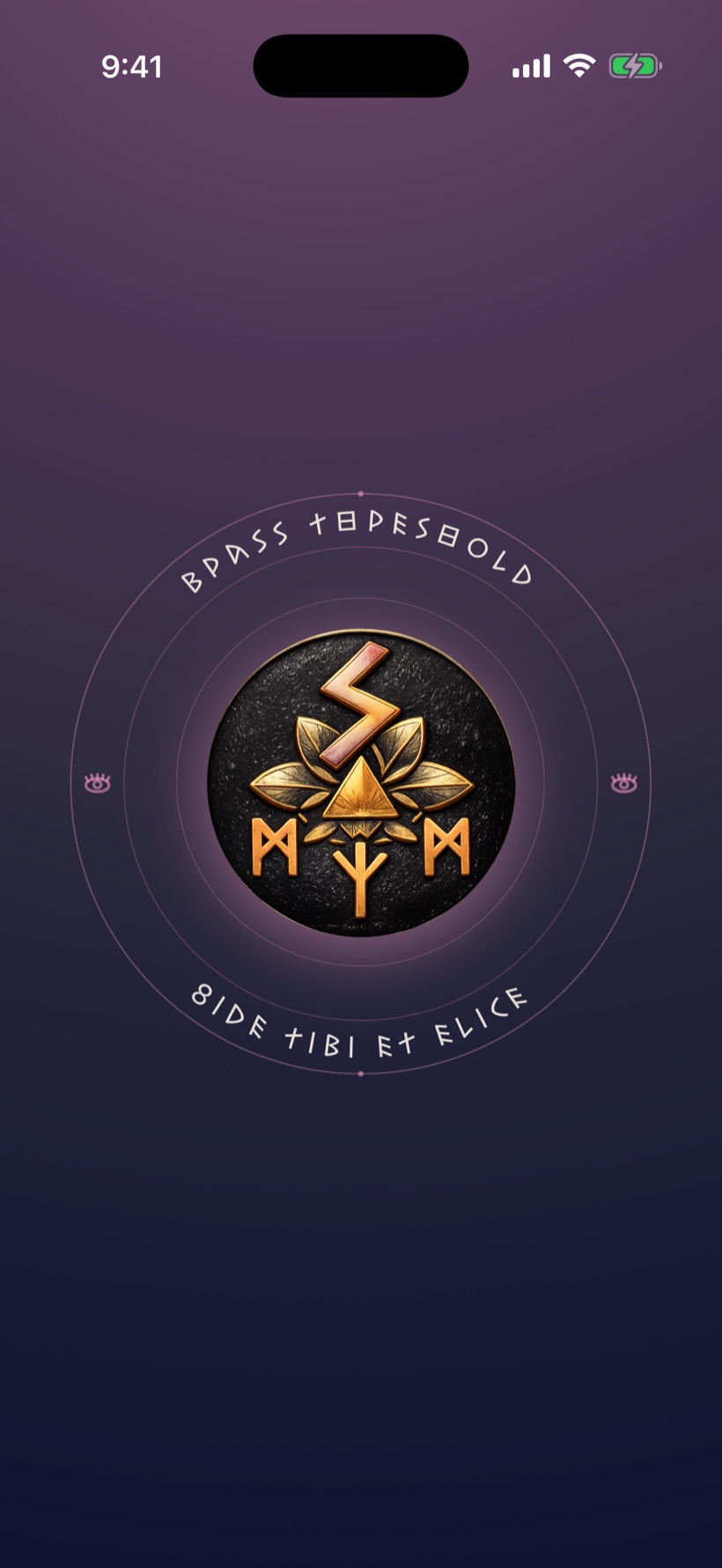
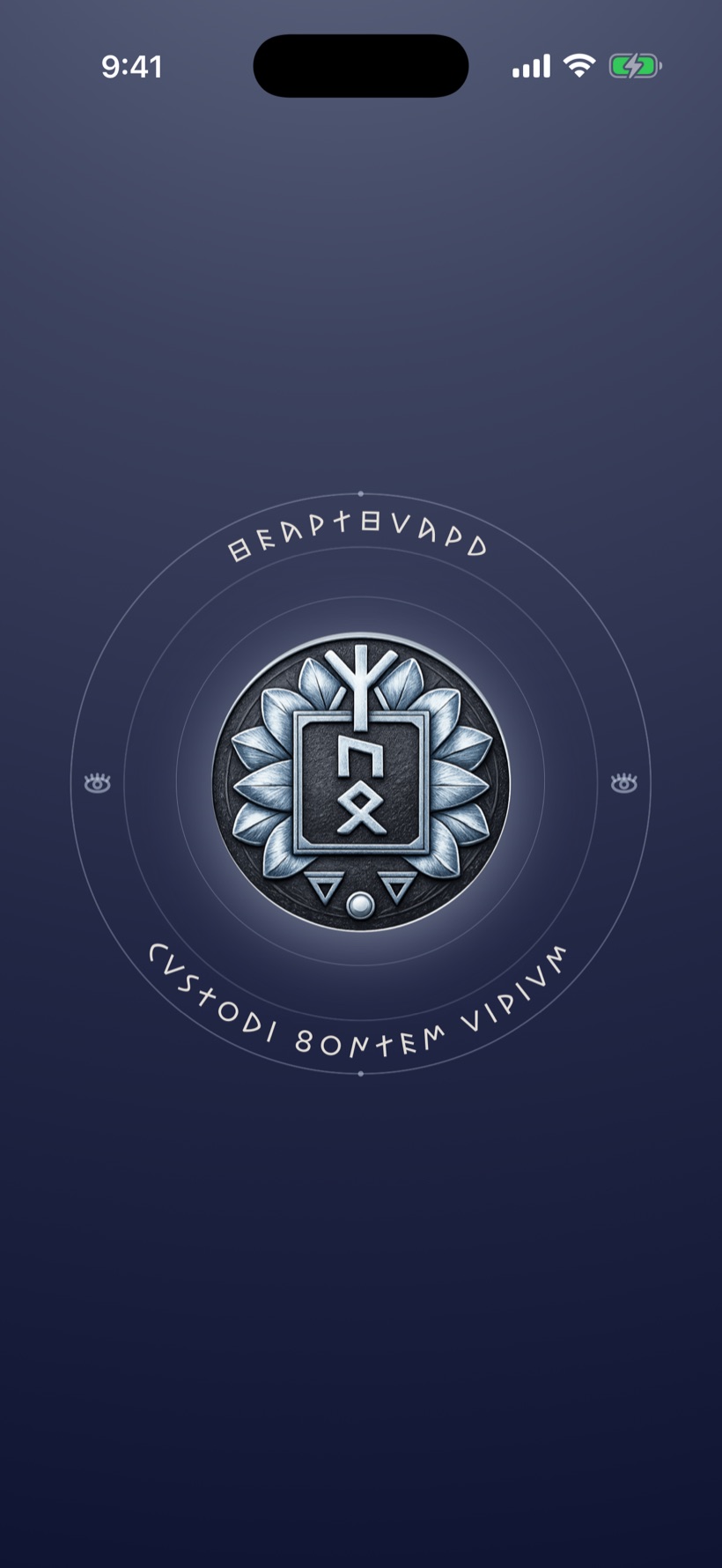
Save yours as a lock-screen wallpaper — a glance is enough.
What will you carry?
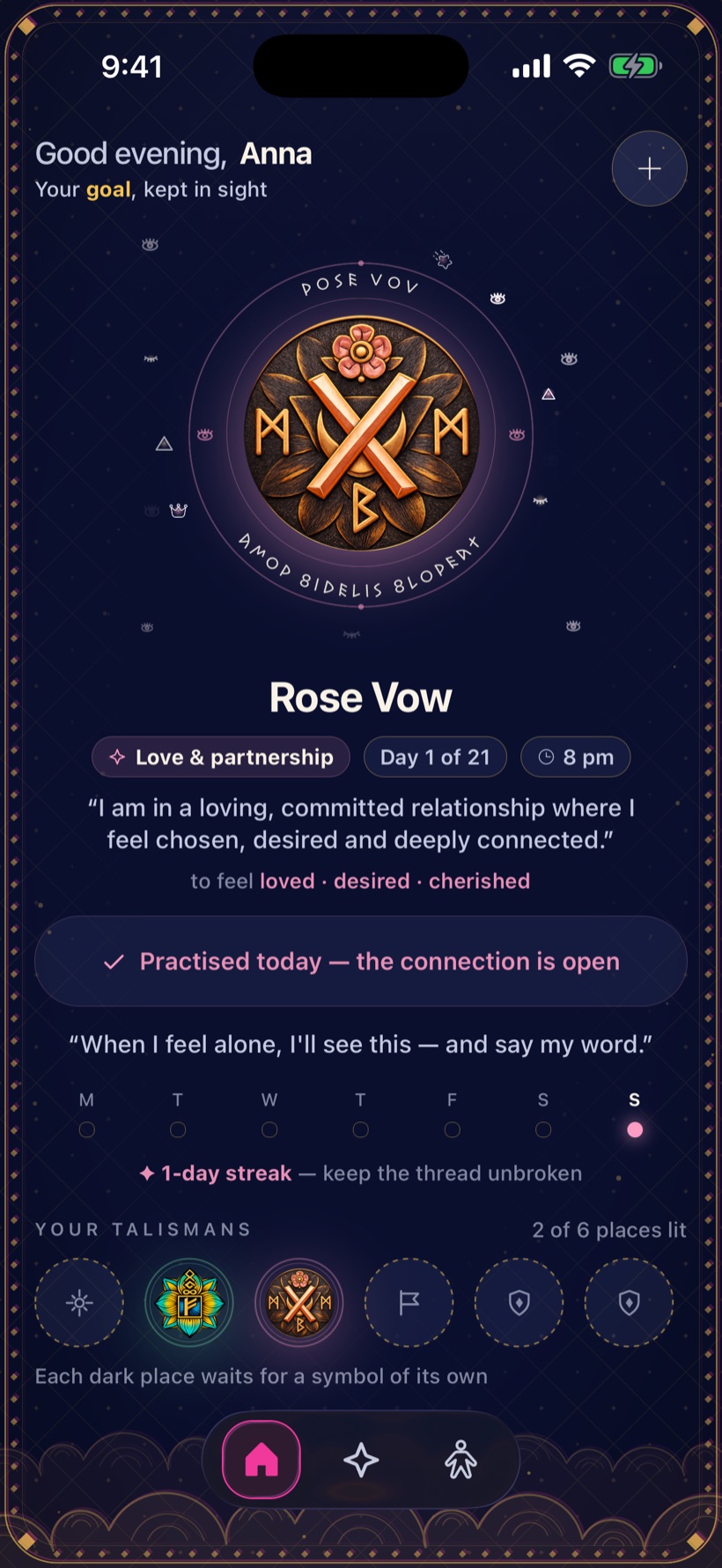
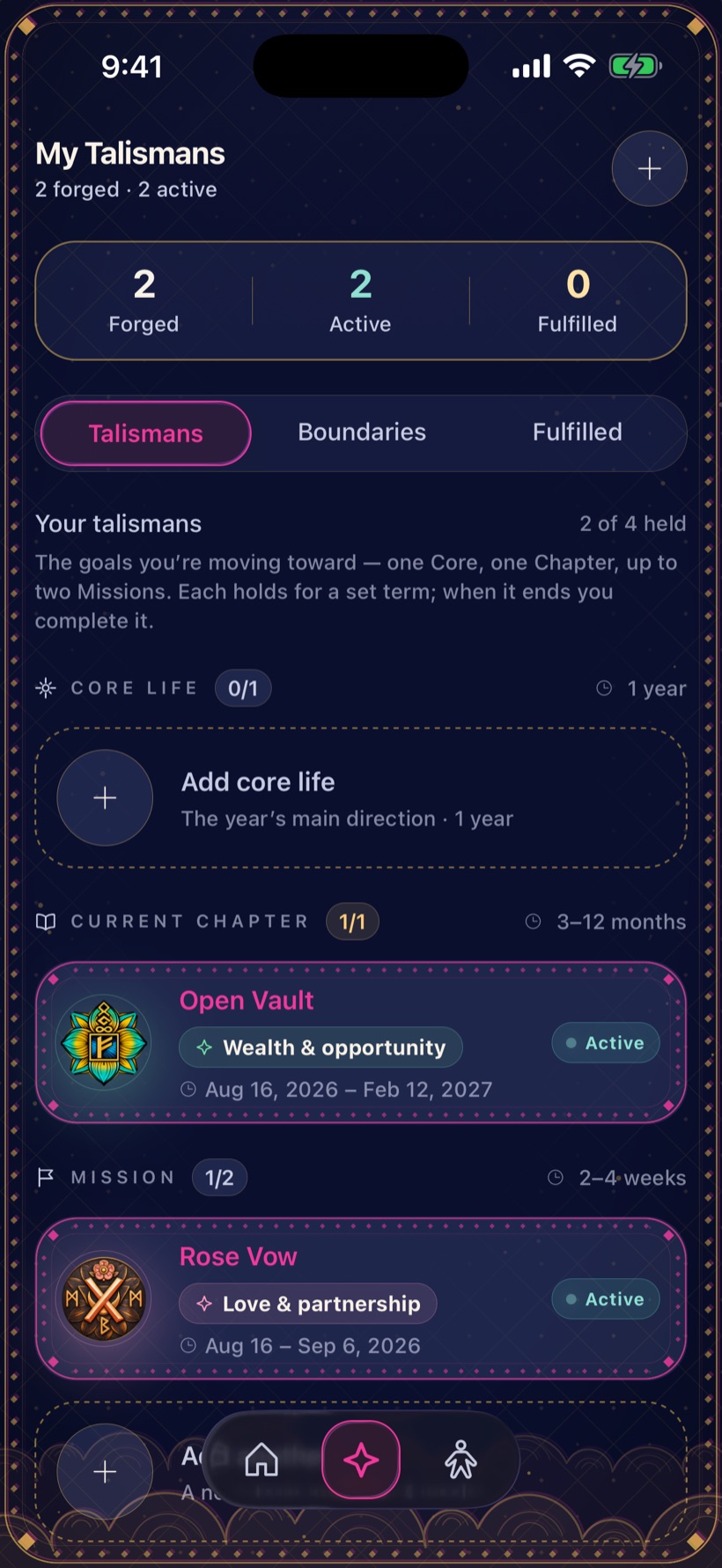
Six places at once, no more: one Core for the year, one Chapter for this season, two Missions for near-term pushes, two Boundaries for the lines you're holding.
The honest part
Humans have carried meaningful objects and performed small rituals for thousands of years — especially in times of uncertainty. Modern research helps explain why it can help. A brief pre-task ritual has been shown to lower anxiety and improve performance; an if-then plan (“when X happens, I’ll do Y”) reliably turns intention into action across dozens of studies; and expectation measurably shapes how we feel through real brain systems. Your sign ties these together — a meaningful mark, a state you name, and a daily action.
We’re careful with the evidence. Effects vary between people and studies — some classic “lucky charm” findings haven’t replicated — so we frame benefits as possible, never a promise. Notably, a ritual can help even when you know exactly how it works: in a randomized trial, an openly-labelled “honest” placebo still outperformed no treatment. Your sign doesn’t replace action — it helps you remember and embody it.
A note on honesty. MyTalisman makes no predictions of any kind — no readings, no forecasts, no horoscopes, no compatibility scores. Nothing it shows is derived from the calendar or the sky. It is for reflection, motivation, and personal ritual; it does not guarantee outcomes and does not replace medical, psychological, financial, or professional advice. The meaning is yours — the work is yours.
The evidence
The symbol traditions
Citations are provided for transparency and further reading; they do not imply the authors endorse MyTalisman.
Simple, honest pricing
Forge one sign and live with it — fully — for three days. Then one simple subscription carries it onward, and every sign you forge after.
Free trial
One sign — everything unlocked.
Premium · Monthly
Billed monthly. Cancel anytime.
Premium · Yearly
Billed yearly at $49.99 — best value.
Less than a coffee a month — for a mark that keeps you pointed at what matters.
Purchased in the app · Auto-renews until cancelled · Cancel anytime in your App Store settings.
Nothing is on sale yet: the plans open when the app does. Follow on Instagram for the date.
Questions
No. There are no readings, forecasts, horoscopes or compatibility scores, and nothing in the app is derived from the calendar or the sky. A sign is drawn from your own words and reflects them back. It works through attention, ritual and meaning — and the app says so plainly on a page called "The science behind it", one tap from the first screen.
A Talisman is made for a goal you're moving toward — it keeps that goal in sight and carries the promise you made about it. A Boundary is made for a limit you've set — it keeps that line in sight and carries the response you chose in advance. Approach and avoidance goals, in the ordinary sense. You can hold some of each at once.
A freshly forged sign is dormant. To wake it, you hold it and speak a short affirmation aloud — two rhyming lines written for that sign, with your own word inside them. Your voice starts its term. Prefer not to speak? Wake it in silence instead. If you do speak, the recording is saved only in the app's own storage on your phone so you can hear it again — it's never uploaded and never transcribed.
About a minute. You settle your gaze on the emblem, take a few paced breaths, say your word, and commit to one if-then plan. Once a day is the rhythm — and there's no streak to lose if you miss one.
You answer a short guided flow — the area your goal belongs to, what you're working toward in your own words, how long the commitment runs, and the design choices that shape the emblem: a feeling, an archetype, a palette, a symbol tradition, a personal symbol, a style. The forge composes a single emblem from those answers. No two are alike, and yours can never be made again.
Six, and the app will not sell you a seventh: one Core for the year, one Chapter for this season, two Missions for near-term pushes, and two Boundaries. Each holds for a real term with a real end date; when a term ends you complete it, and its place opens for what's next.
One sign is free for three days — the full forge, the waking, and the daily minute, no card required. To keep the practice going after the trial, Premium is $4.16/month billed yearly ($49.99) — or $9.99 month-to-month — and carries up to six signs at once. It auto-renews until cancelled; cancel anytime in your App Store settings.
Your words stay yours. We never sell your data or use it for advertising, and voice recordings never leave your device. The full detail is in our privacy policy.
Almost struck
Name what you're working toward, and forge a mark to keep it in sight. MyTalisman reaches both stores soon — three days free when it lands.
One goal, kept in sight. The launch date lands on Instagram first.